
Tired of Buying Salt? Why Your Paving Choice is Killing Your Winter Budget
How to Reduce Ice on Driveway Without Salt?
The Short Answer: Reduce the amount of water left on the surface. Bloxx allows meltwater to drain into the permeable base below, helping reduce pooling, refreezing, and repeated salt use.
Bloxx does not make a driveway iceproof, but it can make salt a targeted safety measure instead of the main method used to keep the property safe. That can mean fewer bags for homeowners and lower material and labour costs for commercial properties.
Driveway ice prevention in Canada often follows the same frustrating cycle: spread salt, melt the ice, and treat the area again after the water refreezes.
If you are researching how to reduce ice on driveway without salt, the paving surface is a good place to start. Asphalt and concrete keep snowmelt on top, where it collects in low spots and freezes. Homeowners buy bag after bag of salt, while commercial properties also pay for labour and repeated applications.
Ecoraster Bloxx directs meltwater through permeable joints and into a free-draining base. With less water sitting on top, there is less opportunity for large ice patches to form.
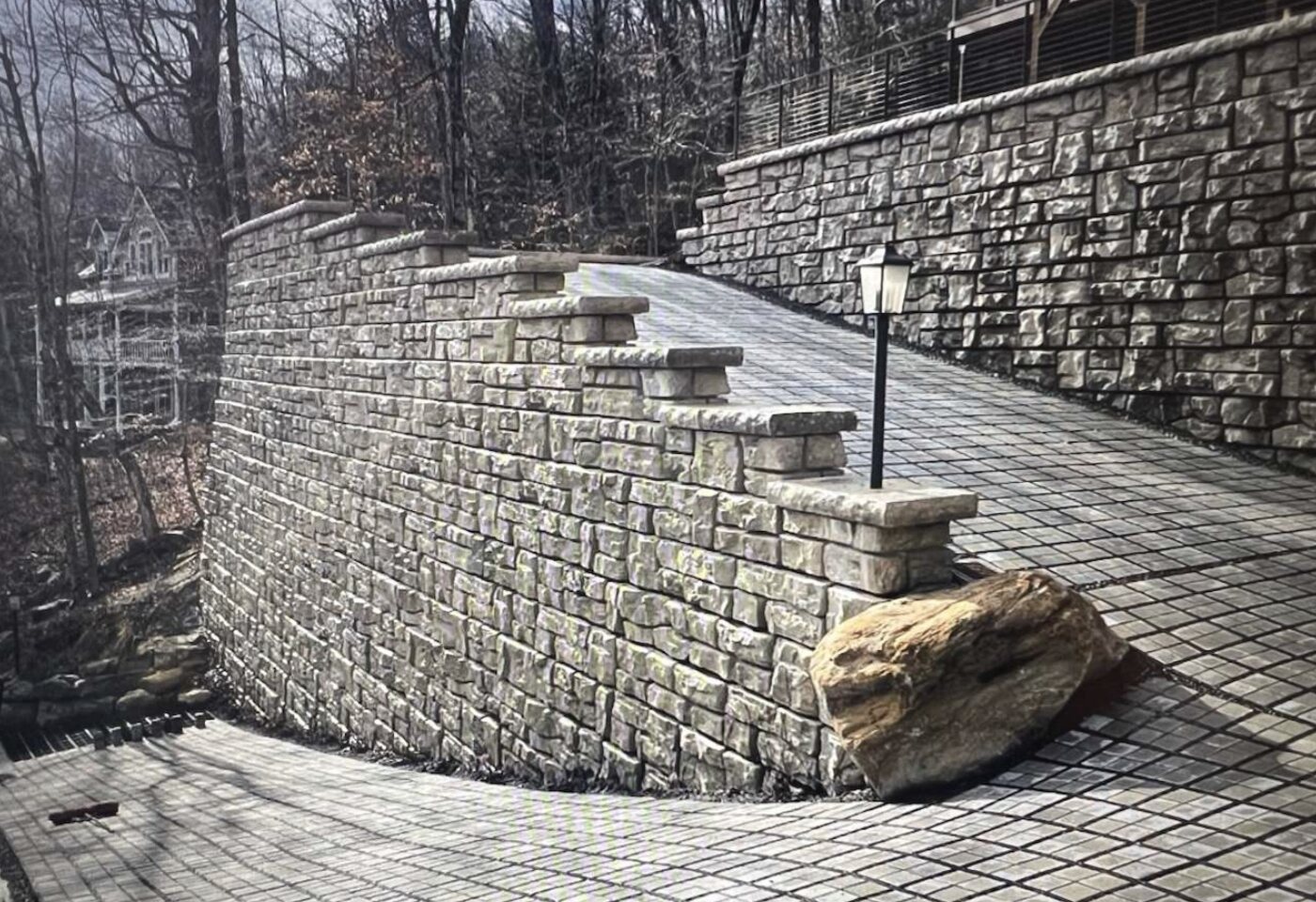
Driveway Ice Prevention Canada: Why Traditional Pavement Creates Ice
Asphalt and concrete do not allow meltwater to drain through the surface. The water must either run off or collect in low spots. When the temperature falls, those puddles freeze into slippery patches.
Much of this ice forms after the snow has already been cleared. Sunlight and daytime warmth melt the remaining snow, then the water refreezes overnight. Cracks and uneven areas give that water even more places to collect.
Salt melts the ice, but it does not correct the drainage problem underneath it. As the salt becomes diluted or temperatures drop, the same area may freeze again and require another application.
Does Permeable Paving Freeze?
Permeable paving can still become icy during freezing rain or sudden temperature drops. Its advantage is that it gives melting snow somewhere to go before it can collect and refreeze.
Bloxx does not absorb water like a sponge. Meltwater passes through the joints and integrated drainage channels, then enters the free-draining aggregate base below. The surface and base work together to move water away from areas where people walk or vehicles travel.
Less standing water means fewer opportunities for broad sheets of ice to form. Proper installation and routine maintenance still matter, but a permeable system addresses the water causing repeated ice buildup instead of relying entirely on salt after the ice appears.
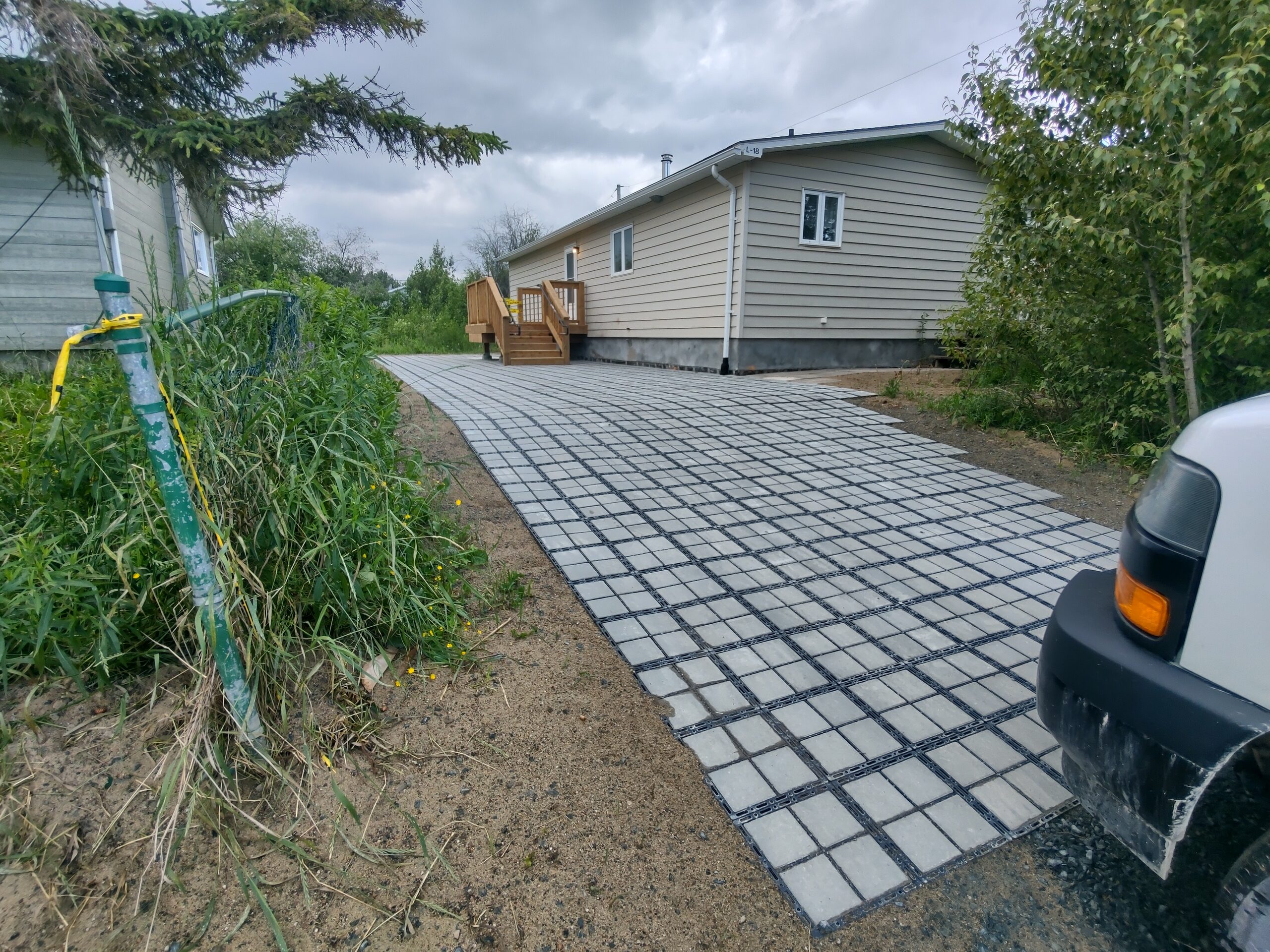
What Does Minimal Salt Use Look Like in Practice?
Using less salt does not mean leaving ice untreated. It means clearing snow first, allowing meltwater to drain, and applying salt only where slippery patches remain instead of repeatedly covering the entire surface.
At the time of writing, Home Depot Canada listed a 20 kg bag of standard rock salt for $7.87.
For commercial properties buying salt in larger quantities, the material costs can add up:
| Salt purchased each winter | Approximate material cost |
|---|---|
| 10 bags | $79 |
| 30 bags | $236 |
| 50 bags | $394 |
| 100 bags | $787 |
Commercial Properties: Lower Salt and Labour Costs
If a commercial property reduced its annual use from 100 bags to 30, it would save approximately $551 in standard rock salt each winter. Actual savings will vary depending on the property, weather, and type of de-icer used.
The material cost is only part of the winter budget. Applying less salt can also reduce spreading time, restocking trips, maintenance callouts, and the number of areas requiring repeated treatment. Fewer recurring ice patches can also create more reliable access for employees, customers, and delivery drivers.
Residential Driveways: Less Work and Worry
Most homeowners will only buy one or two bags of salt each winter, so the financial savings may be modest. The greater benefit is spending less time outside spreading salt and checking the same problem areas after each freeze-thaw cycle.
Canadian winter temperatures often fluctuate above and below freezing. On a conventional driveway, snow melts during the warmer part of the day, pools on the surface, and freezes again overnight. With Bloxx, that meltwater has a path into the permeable base before the next temperature drop, leaving less standing water available to become ice.
Using less salt also means less salty slush tracked into the house or garage and less runoff reaching nearby lawns and gardens. Reducing recurring ice patches can provide safer footing for family members, visitors, and delivery drivers.
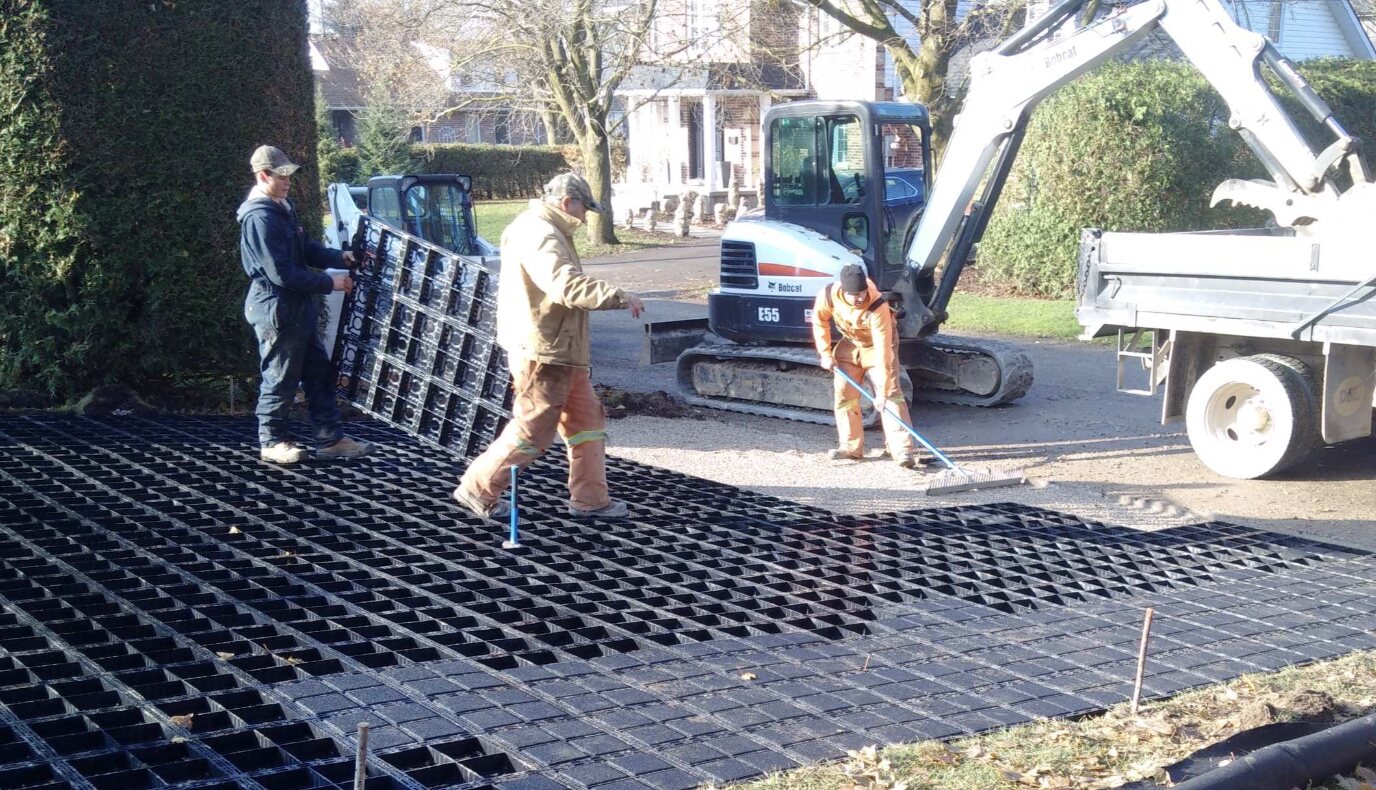
An Eco-Friendly Driveway Winter Routine Uses Less Salt
Canada uses approximately five million tonnes of road salt each year. Once the snow melts, that salt does not disappear. It travels with runoff into soil, groundwater, streams, and lakes. Environment and Climate Change Canada reports that heavy salt use can harm vegetation, soil organisms, freshwater ecosystems, and wildlife.
Around a home or business, the effects may appear closer to the pavement. Salt-filled runoff can reach lawns, gardens, and planted areas beside driveways and walkways. Using less salt reduces the amount that must be absorbed by the surrounding property.
There is also a practical benefit for pet owners. The Canadian Veterinary Medical Association warns that road salt can become trapped between a dog’s toes, causing irritation and inflammation. Less salt on the driveway means less exposure for paws and less residue tracked indoors.
Reducing salt should never mean ignoring slippery conditions. Bloxx helps by reducing the standing meltwater that causes recurring ice, allowing salt to be reserved for the areas and weather events that still require it.
Permeable Paving Winter Canada: What Bloxx Maintenance Looks Like
One advantage of Bloxx is that it does not add specialized maintenance to your winter routine. Ecoraster’s maintenance guide describes the system as maintenance-free. Like any driveway or commercial paved area, the surface still needs normal snow removal and occasional cleaning.
Permeable Driveway Winter Maintenance Canada: A Simple Routine
Snow can be removed with a shovel, snow blower, or plow. When plowing, Ecoraster recommends using a flexible rubber edge, spacer pucks, or skids to prevent a metal blade from striking the units directly. Leaves and other surface debris can be swept, raked, or blown away as needed.
Once the snow begins melting, the permeable joints and aggregate base manage the water below the surface. This reduces the need to keep treating standing water as temperatures fluctuate.
If an individual Bloxx insert becomes damaged or stained, it can be removed and replaced without tearing up a larger section of pavement. Beyond normal snow clearing and surface cleanup, Bloxx does not require a separate winter maintenance program.
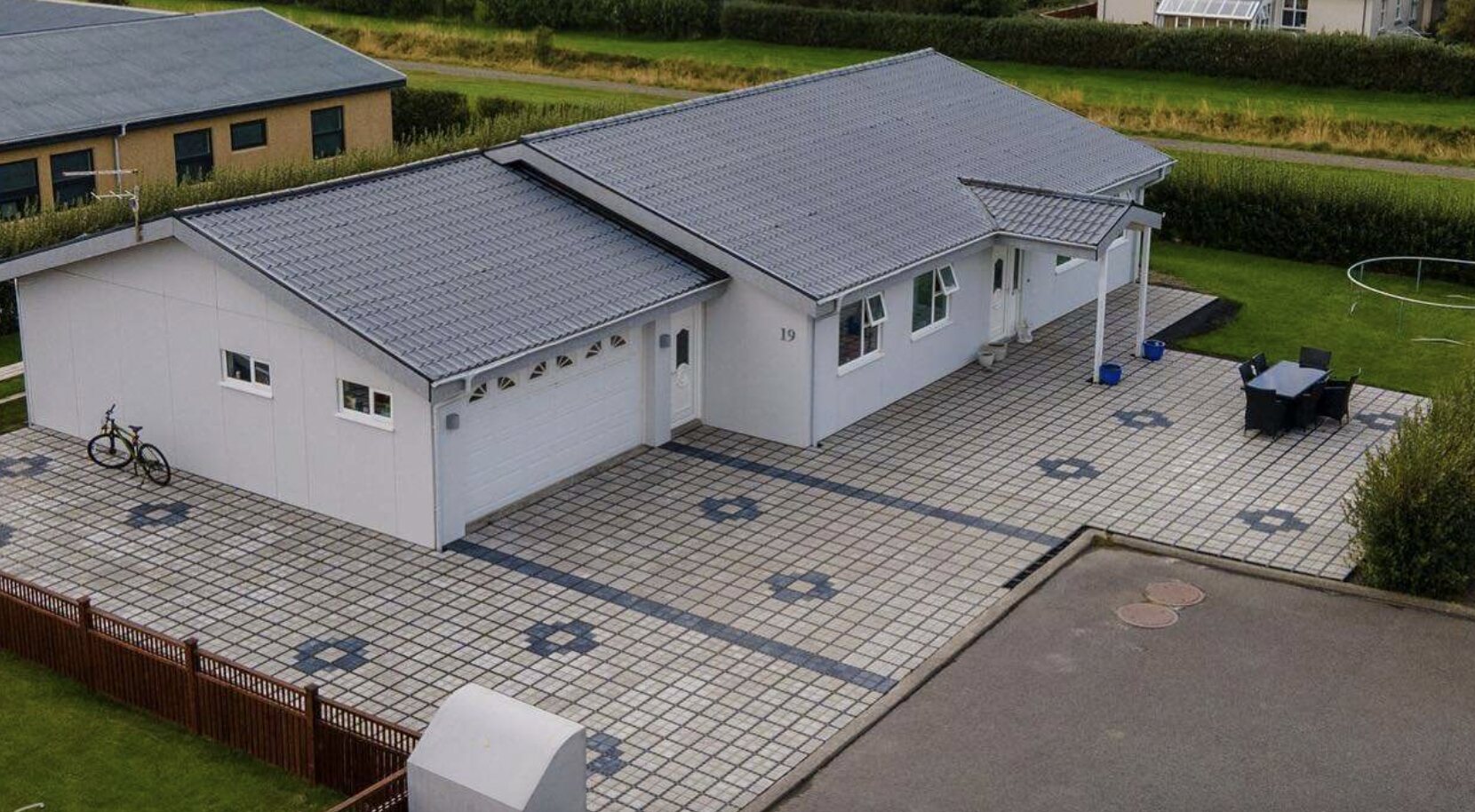
Conclusion: Spend Less of Winter Spreading Salt
Salt will always have a place in winter safety, but it should not have to compensate for pavement that repeatedly holds water. When a driveway or parking area is due for replacement, choosing a surface that manages meltwater can reduce the work required every winter afterward.
Ecoraster Bloxx provides a solid, accessible surface while allowing water to drain through its joints and into the base below. That can mean fewer recurring ice patches, more targeted salt use, and less time spent treating the same areas.
Planning a residential driveway or commercial paving project? Contact us to talk about your property and whether Bloxx is the right fit.


